Why heat matters more than you think
Of everything that shortens a lithium battery's life, heat is the most underrated. A pack that routinely runs hot loses capacity years before its time, and the damage is permanent — you cannot cook it back to health. BAT-BMS reads the temperature sensors on the BMS so you can catch a thermal problem before it becomes a damaged pack.
Reading the sensors
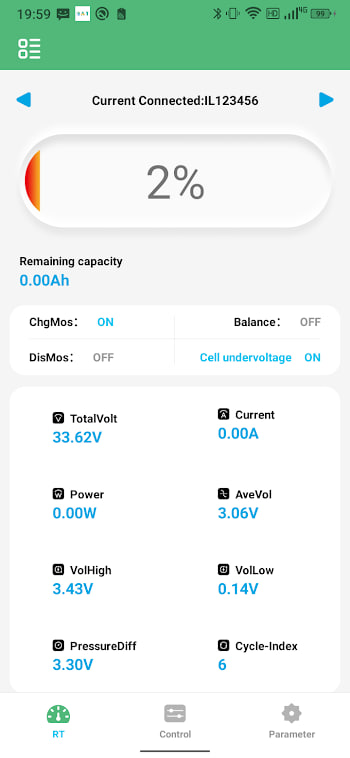
Most BMS modules expose one to four temperature probes. BAT-BMS shows the current reading, usually in degrees Celsius, on the dashboard or a dedicated panel. If you see two numbers, one is often the cell area and the other the MOSFET or power stage — the power stage runs hotter under heavy current, which is normal.
Safe ranges to aim for
| Region | Charge | Discharge |
|---|---|---|
| Comfortable | 0 to 45 °C | 0 to 45 °C |
| Caution | 0 to -10 °C | -10 to 0 °C |
| Avoid | below -10 °C | above 55 °C |
These are general lithium guidelines. Always defer to your cell manufacturer's data sheet for exact limits.
Setting thresholds
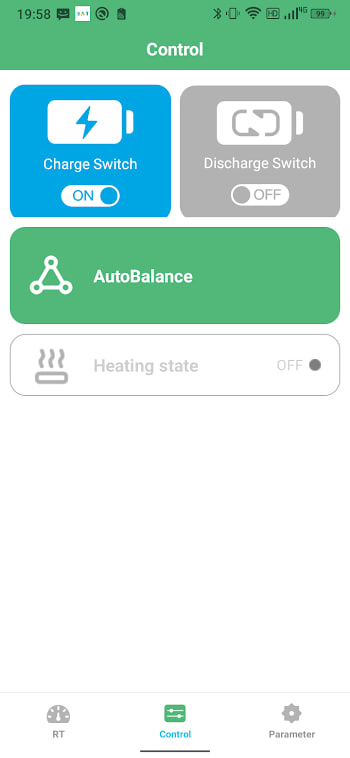
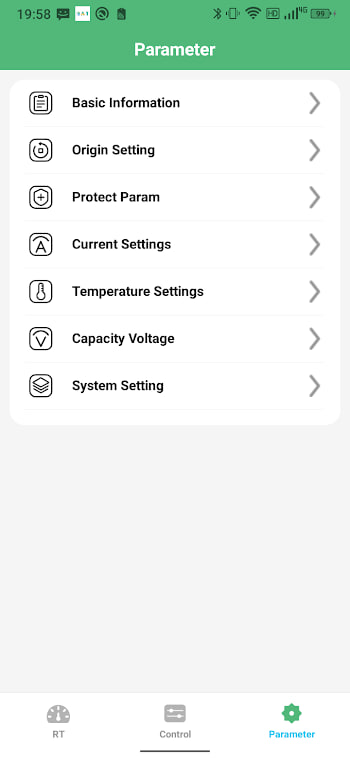
On supported modules, BAT-BMS lets you set the temperature at which charge or discharge is cut. Set them with a margin below the danger zone, not at it — sensors lag behind reality, and you want the cut to happen before the cells are already too hot. A charge cut around 45 °C and a discharge cut around 55 °C is a sensible starting point for most builds.
Finding hot spots
If the reading climbs under load, the cause is usually one of three things: a connection that has loosened and is now resistive, a cell that has high internal resistance, or simply too much current for the pack size. A sudden jump in temperature is far more concerning than a slow rise — sudden heat points to a bad connection that needs immediate attention.
Cold weather caution
The other side of the coin is cold. Charging a freezing lithium cell causes lithium plating, which permanently damages it. If your pack lives outside, check the temperature before you charge on a cold morning. Many BMS modules block charge below 0 °C automatically, but it is worth confirming in the app rather than assuming.