How error codes work in BAT-BMS
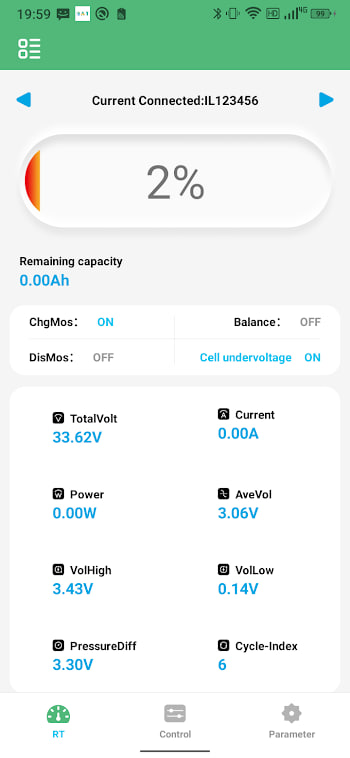
When the BMS spots a condition it does not like, it raises a protection flag and BAT-BMS shows it as an error code or a labelled alert. Most codes are protective — they fire to prevent damage, then clear once the condition passes. The trick is knowing which ones need you to act and which ones just need patience.
Below is a table of the codes users see most often, what each one means, and the first thing to try. Tap Copy to grab the code if you need to search or share it.
Common error codes
| Code | Meaning | First action |
|---|---|---|
OVP | Over-voltage protection — a cell exceeded its max voltage. | Stop charging. Let the balancer bring the high cell down. |
UVP | Under-voltage protection — the pack ran too low. | Recharge gently. Avoid running this low again. |
OCC | Over-current charge — charge current exceeded the limit. | Lower the charge source or check for a stuck contactor. |
OCD | Over-current discharge — you pulled too much, too fast. | Reduce the load. Size the pack to the inverter. |
OTP | Over-temperature protection. | Let the pack cool. Find the heat source — see temperature. |
UTP | Under-temperature protection — too cold to charge. | Warm the pack before charging. |
SC | Short circuit — the BMS tripped on a fault. | Disconnect and inspect wiring before reconnecting. |
NTC | Temperature sensor fault. | Check the sensor connector; replace if damaged. |
Clearing an error
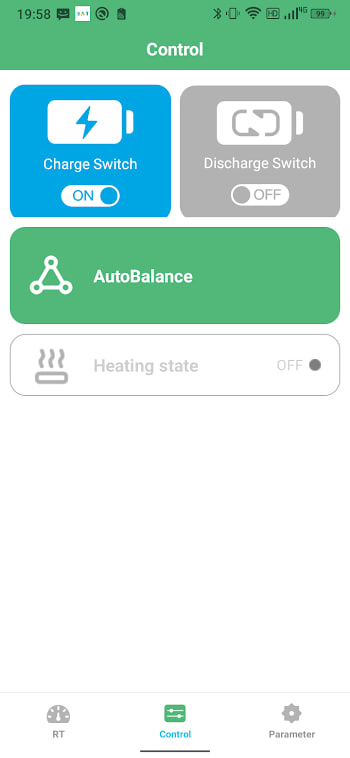
Most codes clear on their own once the condition resolves — the pack cools, the current drops, the voltage recovers. If a code sticks around after the cause is gone, the BMS usually has a clear or reset option in the app. Use it sparingly. Clearing a code without fixing the cause just guarantees it comes back, possibly worse.
When a code keeps coming back
A code that fires repeatedly is telling you something is structurally wrong, not transient. OVP on the same cell every charge points to a balancer or cell problem. OCD on every heavy load means your pack is undersized for the job. Stop clearing and start diagnosing. The common problems guide maps recurring codes to their root causes.
Safety first
Two codes deserve real respect: short circuit and persistent over-temperature. If you see SC, disconnect the battery and inspect before doing anything else. If OTP refuses to clear, there may be a fault dumping heat into the pack. In both cases, the BMS is doing its job — your job is to find the cause, not to silence the alarm.