What the videos show
If you have opened Instagram or YouTube Shorts in the first week of July 2026, you have probably seen them: clips of e-rickshaws in Indian cities slowing to a stop while someone nearby waves a phone running a green battery app. The captions claim a "Chinese app" can switch off any electric three-wheeler over Bluetooth, and the app in the videos is BAT-BMS — the same battery monitor this site covers.
The clips spread fast because they look dramatic and because most viewers had never heard of a BMS app before. National outlets including Business Standard, India TV and the Sunday Guardian picked the story up within days, and "BAT-BMS app" went from a niche tool for battery tinkerers to a trending search overnight.
What BAT-BMS actually does
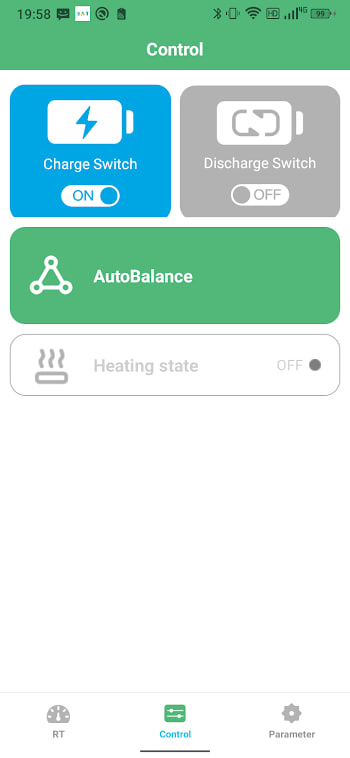
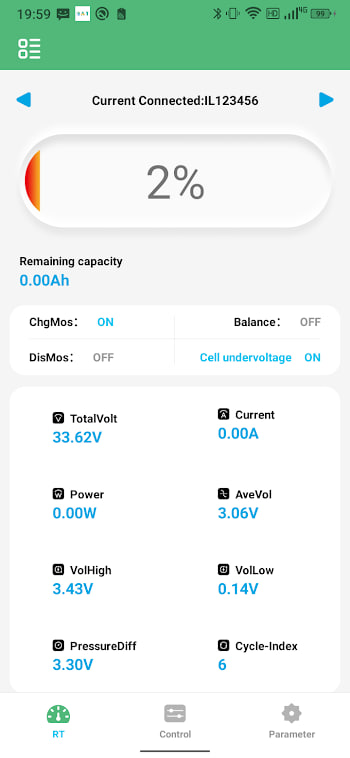
Stripped of the drama, BAT-BMS is a monitoring app made by Shenzhen Grenergy Technology. It talks to a battery management system — the small circuit board inside a lithium pack — over Bluetooth and shows you the state of charge, cell voltages, current and temperature. On packs that support it, the app can also toggle the charge and discharge switches, which is a normal maintenance feature: the same switch a workshop uses to safely isolate a pack before working on it.
That discharge switch is the whole story. If a battery accepts a connection from the app, whoever is connected can turn the output off, and an e-rickshaw with its output off rolls to a stop. Nothing is damaged and nothing is hacked in the Hollywood sense — the pack simply does what its own BMS was built to do.
What the fact-checks found
The scary version of the claim — that anyone can walk down the street and kill any e-rickshaw — does not hold up. India TV's fact-check, among others, found that the app needs to pair with a specific battery before it can control anything, and packs that are configured properly do not accept strangers.
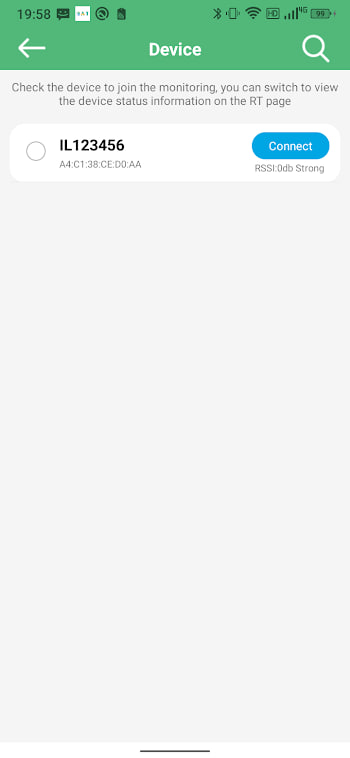
The uncomfortable part is the word configured. A lot of budget packs ship with Bluetooth pairing wide open and no password set, because that makes life easy for the dealer. On a pack like that, the app connects without asking anyone. So the honest summary is: the claim is exaggerated, but the videos are not all fake — they work against batteries that were left unlocked, the digital equivalent of a parked car with the keys in it.
Which vehicles are affected
Only vehicles whose battery uses a compatible smart BMS with Bluetooth enabled and no pairing protection. That mostly means low-cost e-rickshaw packs built on generic BMS boards. It does not affect petrol vehicles, it does not affect electric cars from mainstream manufacturers, and it does not affect any pack whose Bluetooth is disabled, password-protected, or bound to the owner's phone.
| Setup | Exposed? |
|---|---|
| Smart BMS, open pairing, no password | Yes |
| Smart BMS with pairing password set | No |
| BMS with Bluetooth off or removed | No |
| Plain BMS without Bluetooth | No |
How owners can protect themselves
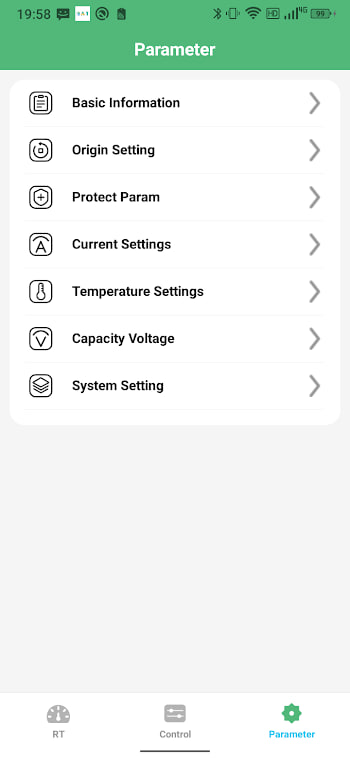
If you drive or sell e-rickshaws, the fix costs nothing and takes minutes. Connect to your own battery, open the settings, and set a pairing password so the pack rejects unknown phones — our password and pairing security guide walks through it step by step. If your BMS offers no password option, ask your battery dealer to disable Bluetooth broadcasting or bind the pack to your phone. And if your vehicle ever cuts out near someone filming, the recovery is usually as simple as switching the battery off and on at the physical switch, which resets the BMS output.
The bottom line
BAT-BMS is a legitimate maintenance tool that got famous for the wrong reason. The viral videos exploit unlocked batteries, not a flaw in Bluetooth or a secret backdoor. Deliberately stopping someone else's vehicle in traffic is dangerous and illegal — treat the trend as a warning to lock your own pack, not a party trick. Once a password is set, the app goes back to being what it always was: a free window into your battery's health.